Robotics meets day-to-day construction site operations

Mar 16, 2026

How the ConBotics Painter Robot enables safe and predictable workflows

In the skilled trades, full order books come up against teams with limited staff. That is precisely why it is worth looking at automation not only as something that is merely nice to have, but as a real option for making recurring and physically demanding work more reliable and possible to plan. This is exactly where ConBotics comes in for painting tasks: The team led by CEO and co-founder Cristian Amaya Gómez is developing an autonomous, mobile painting robot that automates large-scale airless spraying in a repeatable and reliable manner. The aim here is to make a work process so stable and predictable that companies can once again make reliable plans for their day-to-day construction site operations.

One thing was clear right from the start: Not only is the coating performance crucial, but also the question of whether the robot would work reliably in a real construction site environment. After all, the painting robot is only really useful if it operates safely and predictably in these situations, while ensuring both a stable process flow and high surface quality.


Safety as a prerequisite for series maturity

The ConBotics founding team brought extensive experience in robotics to the table from their time working together at Fraunhofer IPK. This resulted in quick development of a viable solution for the Painter Robot with motion control, process logic and repeatable path planning. But the closer the system got to day-to-day use at construction sites, the clearer it became why many autonomous machines fail – not because of the basic functionality, but due to the product maturity. It is not enough for a robot to run smoothly in the lab. It must react in a controlled manner in the field when people enter the working range or objects suddenly get in the way. It has to work in such a way that neither the coating quality nor user acceptance suffers. 

For Cristian Amaya, it was clear early on that safety cannot be a mere afterthought; it has be considered from the outset. Since the development team was small, ConBotics did not want to use its own resources to build a basic safety architecture along with verification management. It wanted to invest in the areas that really differentiate the product, namely robotics and process automation. That is why the company looked for a safety basis that was economically attractive, worked reliably and could be integrated in such a way that it sped up rather than slowed down development.


A clear division of labor on the construction site: the robot ensures consistent, reproducible surface performance, while people focus on the detail work.
Division of labor at construction sites: The robot delivers repeatable performance, while humans do the detailed work.
A clear division of labor on the construction site: the robot ensures consistent, reproducible surface performance, while people focus on the detail work.
Division of labor at construction sites: The robot delivers repeatable performance, while humans do the detailed work.

Economic safety architecture with Flexi Net

ConBotics found exactly the basis it needed for its autonomous Painter Robot in the SICK Flexi Net safety controller. The Flexi Net control architecture makes optimal use of existing drive data, reads the CANopen data from the chassis, and combines it with cost-effective HTL encoders. This information is processed into safe speed and position values in the certified motion function blocks.

This close interaction between existing drive technology and intelligent evaluation significantly reduces the need for hardware and cabling work and creates a streamlined, cost-efficient safety architecture. That means the Flexi Net can be integrated seamlessly into the robot system and ensures that motion quality and functional safety are in perfect harmony.


Consistent integration with EFI-pro 

With the Flexi Net as a foundation, ConBotics was able to expand the system in a targeted manner without having to redo integration for each new requirement. This is because SICK offers a wide range of sensors for different functions that can be integrated into a safety architecture in a structured manner. Sensors and safety logic communicate within a consistent framework with EFI-pro, the reliable device and control network from SICK. This is a practical advantage for a development team: Fewer interface variants, fewer special solutions, less work during commissioning and diagnostics, all which creates a faster path to stable releases.

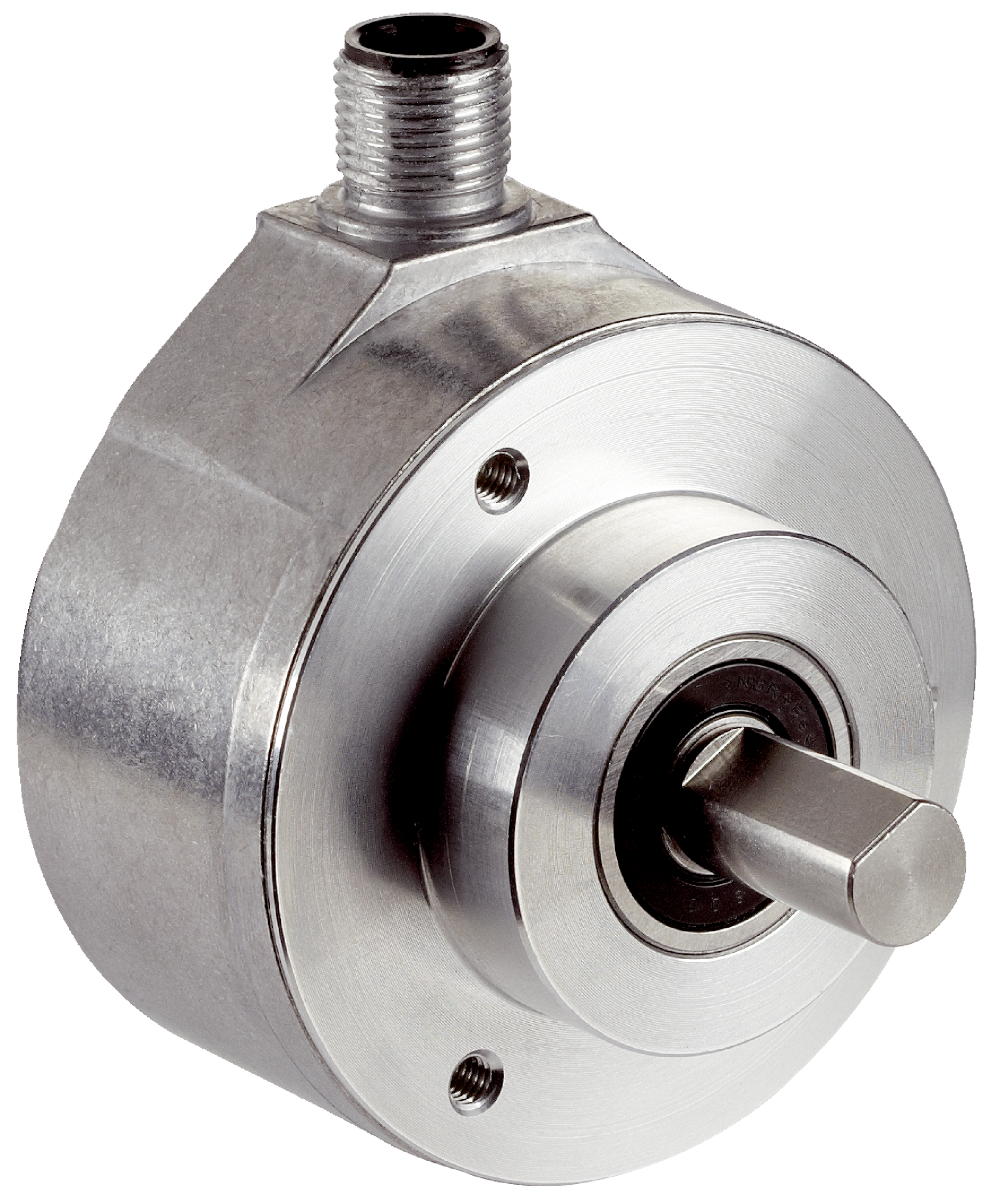
This value of this approach is clear with the ConBotics Painter Robot: The DFS60B incremental encoder provides precise motion data for clean path guidance. The WTT12-S optical object and masking detection system identifies edges on stairs and openings, allowing for reliable fall protection. 

 
Edge protection at stairways: the WTT12-S detects edges and transitions, enabling the painting robot to restrict its travel in good time.
Fall protection at stair edges: The WTT12-S detects edges and transitions so that the Painter Robot can limit its movement in good time.
Edge protection at stairways: the WTT12-S detects edges and transitions, enabling the painting robot to restrict its travel in good time.
Fall protection at stair edges: The WTT12-S detects edges and transitions so that the Painter Robot can limit its movement in good time.


The IQB2S mechanical monitoring system checks for lockout states, such as correct locking of the spray gun. And when it comes to environmental safety, safety laser scanners from the nanoScan3 family are used to detect people and objects and prevent collisions, for instance, with ladders or paint buckets.

 
Incremental encoders
High-resolution, programmable incremental encoder for demanding applications
DFS60
Safety controllers
Safety controller for stationary and mobile machine architectures
Flexi Net
Safety distance sensors
Safety sensor for muting and fall edge detection up to SIL 1 and PL c
WTT12-S
Safety laser scanners
The smallest safety laser scanner from SICK – extremely rugged and highly precise
nanoScan3
Safety switches
Small, cuboid inductive safety switch for position monitoring
IQB2S
Thanks to the nanoScan3, the painting robot detects obstacles at an early stage. The status display on the tablet makes it easier for the operator to interact with the robot.
Thanks to the nanoScan3, the Painter Robot detects obstacles early on. The status display on the tablet facilitates user interaction with the robot.
Thanks to the nanoScan3, the painting robot detects obstacles at an early stage. The status display on the tablet makes it easier for the operator to interact with the robot.
Thanks to the nanoScan3, the Painter Robot detects obstacles early on. The status display on the tablet facilitates user interaction with the robot.

Certified safety module for predictable certification

The closer a system gets to use in practice, the greater the impact of the certification process in terms of cost and time. For ConBotics, it was important not only that the safety functions worked on a technical level, but also that they could be certified at a reasonable cost in a reasonable amount of time. This is where SICK offers a key advantage: Safety-certified components, tested function blocks and the availability of a documentation base reduce the scope of verification management. ConBotics was able to focus more on application-specific integration instead of having to justify and document every safety function from scratch.

This not only saves time, but also reduces project risks. When the documentation basis is stable, the transition from pilot to pre-series production can be planned much more effectively. This is an aspect that often makes or breaks market entry, especially for new robotics systems.


Technical support in integration

From the point of view of ConBotics, the fact that these advantages could be made a reality in practice was not solely due to the products, but also to the technical collaboration process. SICK did not act as a mere supplier, but supported the implementation process with test sets, proven procedures and engineering right through to commissioning. For ConBotics, this meant less trial and error, faster verification under real conditions, and an integration process that did not end with specifications, but instead with a stable, running system.

For Cristian Amaya, it was precisely this combination that proved crucial: A wide selection of proven safety components, a clear integration path with EFI-pro and a system of support that relieved the team during critical phases without taking away their own product responsibility.


Robotics and integrated safety working together

This partnership allows ConBotics to focus on what really matters to customers: A robotics solution for efficient automation in painting processes. With Flexi Net, the team has an economically integrated safety architecture that enables autonomous operation at construction sites. The broad SICK product range can be expanded in a structured and flexible manner with EFI-pro without disrupting the system architecture, and the safety-certified components reduce the time and costs needed for verification. Together with technical support, this has resulted in a system that has already passed practical tests and now helps companies work in a predictable manner despite limited staff.


Other articles

Super Trooper: Autonomous robot helps gardeners transport potted plants

Read more 

Read more
Robot colleagues now coming to construction

Read more