
Efficient production processes by retrofitting SMEMA systems with Hermes Standard - Optimize your production
PCB assembly line operators whose existing machines have SMEMA interfaces face obstacles when transitioning to fully automated digital factories because they cannot achieve consistent data flow between their machines. Moreover, the ethernet-based Hermes standard is gradually replacing the outdated SMEMA standard. But attaining a higher level of automation remains beyond reach unless the Hermes standard is used consistently for all machines in an assembly line.
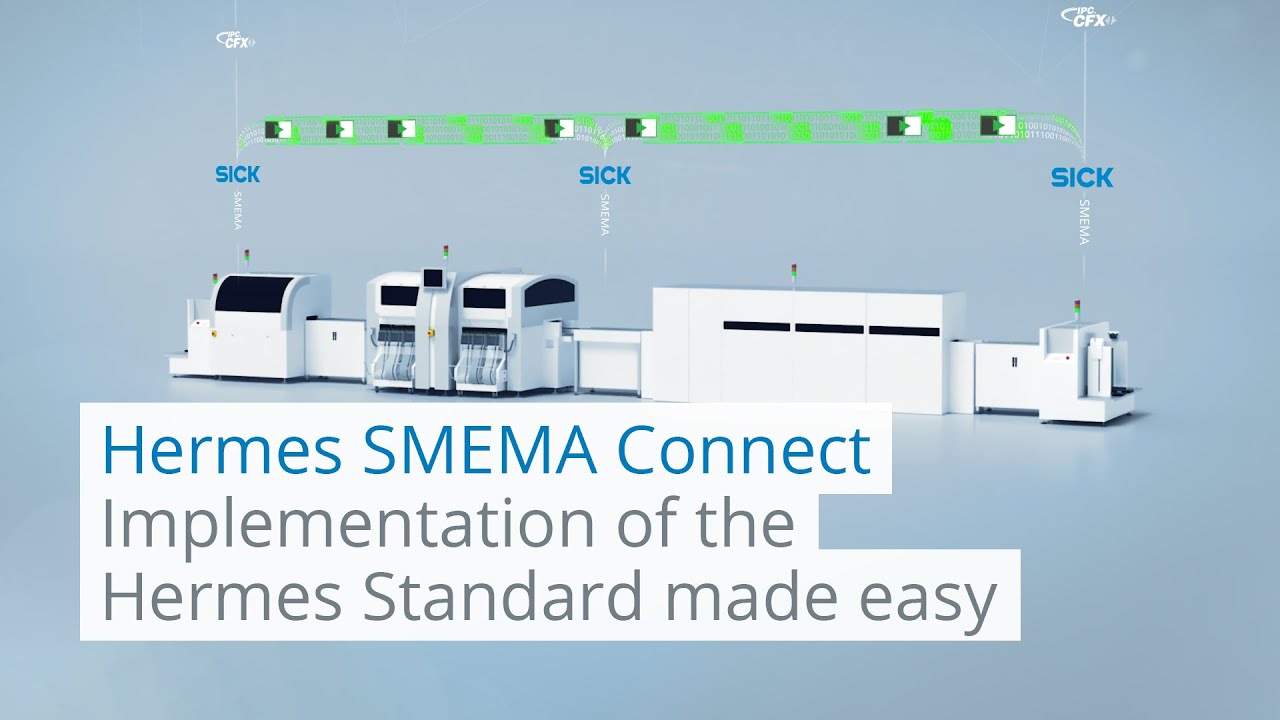
SICK HERMES Standard solutions enable smooth integration of PCB assembly machines into the Hermes Standard world. With the Hermes-SMEMA connect app and a sensor integration device, SMEMA signals are translated into Hermes messages, facilitating consistent data exchange between the machines. Connecting the sensor integration device to the SMEMA interface is easy, and the intuitive web-based user interface simplifies configuration for many machine types. The solution provides greater automation of line controllers and consistent traceability of printed circuit boards.

Advantages of this solution
Sustainable use of existing machines by retrofitting them quickly and easily with the Hermes Standard solution for machine-to-machine communication, traceability and data consistency. Investment costs for upgrading from SMEMA to the Hermes Standard are reduced. Customization and expansion are easily accomplished thanks to the flexible hardware and SensorApp concept.

The most important things in a nutshell of Hermes Retrofit:
- Cost-effectiveness: Hermes Retrofit offers a cost-effective way to upgrade existing machinery and equipment and improve their productivity and efficiency without incurring the cost of purchasing new machinery.
- Sustainability: by upgrading existing machines instead of replacing them completely, companies can reduce their environmental footprint and achieve their sustainability goals.
- Flexibility: Hermes Retrofit allows machines and equipment to flexibly adapt to changing production requirements by equipping them with advanced sensor technology and data processing units to ensure greater accuracy and productivity.


