Co-creation is an ambitious approach to developing solutions together with the customer. But how can this shift in perspective – from the development office into the customers’ production halls – be achieved? The “VISION Group” team at SICK’s subsidiary in Japan simply tried it out for themselves and, with the spirit of a “hidden” startup, achieved some astounding results.
Japan is one of the most economically advanced nations on the planet. Japanese brands are known and loved the world over. Nowadays, robots are commonplace in industrial facilities – and becoming ever more so. This is leading to a rise in demand for industrial image processing systems too.
Industrial image processing
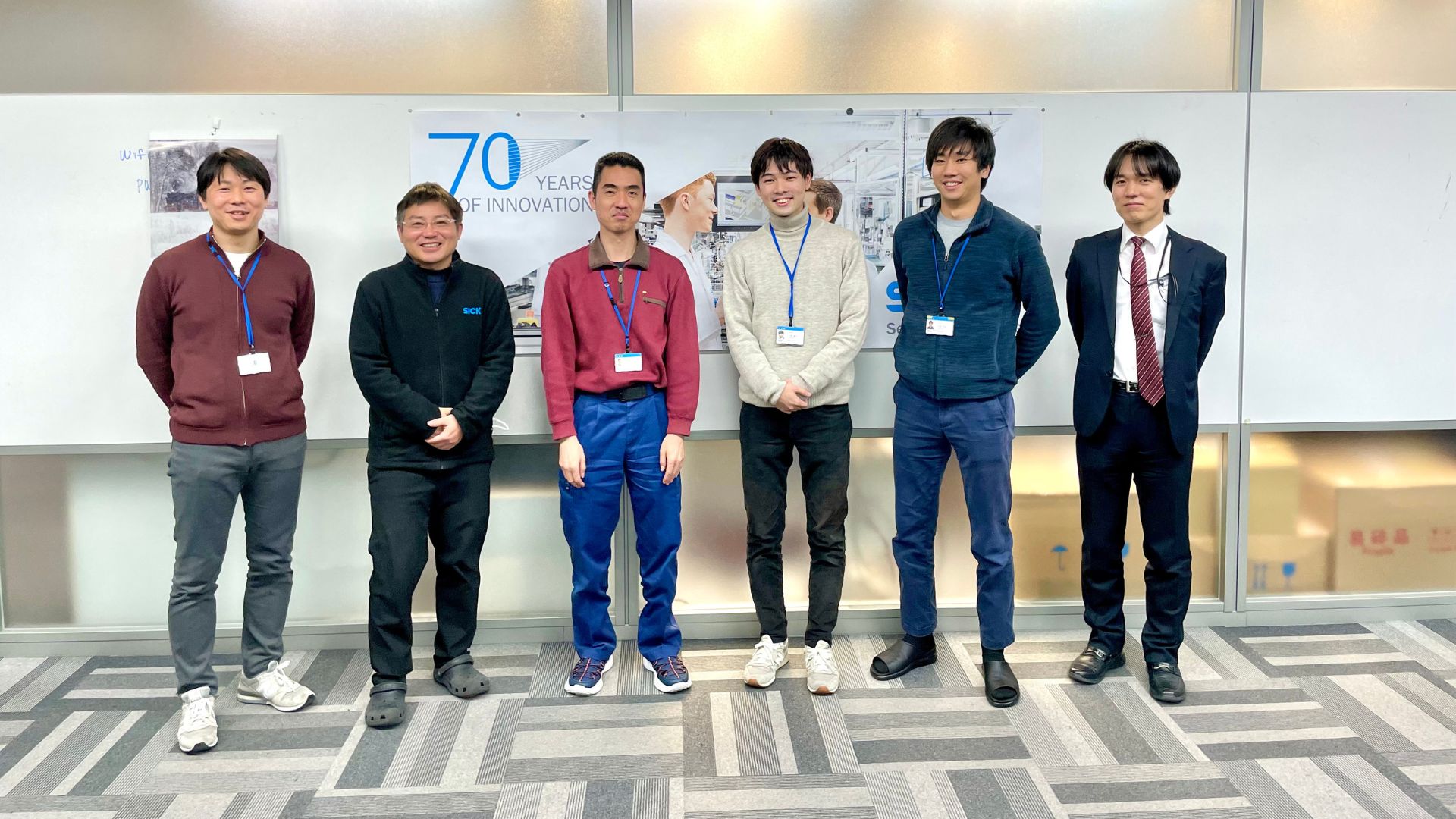
The “Vision Group” at SICK K.K. in Tokyo was originally established to support the sales and marketing of image processing products like 3D/2D cameras and image processing systems. The team comprises four engineers for image processing applications, one back-office engineer and two further engineers. “All of us have assisted in the sales and marketing of image processing products on the technological side of things,” says Yusei Tsuboi, Ph.D. “Today it’s mainly the four application engineers who are driving innovation here. This involves developing key technologies in uncharted market territory.”
Yusei Tsuboi joined SICK K.K. in 2008 and established the technical support service. Since 2013, the number of team members has been gradually increasing. The team members possess a range of expertise. One expert specializes in developing image processing systems for factory automation applications and also supporting young employees who are passionate about future technologies like AI and deep learning and dedicate themselves to solving complex problems. A sub-team is created for each project.
The team’s activities are based largely on the vision sensor portfolio developed by the Swedish specialists at SICK’s subsidiary IVP in Linköping, which draws upon its many years of experience to develop intelligent vision systems for highly specific applications like robot controllers and package sorting systems.
Industrial image processing solutions enable machines to “see,” meaning that manual inspection tasks could potentially be augmented or even replaced by digital cameras and digital image processing functions.
Projects
Since 2018, the “Vision Group” has implemented more than 50 projects annually in the field of image processing applications. The team has performed a whole series of tests to assess the viability of customer requirements. “We have never yet seen the same applications in use at different customer sites. This means that the number of applications now known to us in a whole variety of industries has risen to 700 since 2018,” says Yusei Tsuboi. “We also often visit the customer’s site itself so that we can discuss their needs and ideas with them face to face. As a result, we have established that there are questions and problems that cannot be resolved in an ideal fashion with SICK’s current portfolio. To compensate for this, we have started to examine with even greater intensity the potential offered by technology in the fields of image processing, optics, mechanics and robotics. This has raised the level of expertise within the team. We realized that some of our skills can lead to new solutions that open the door to a new market. In the field of robotics in particular, we have redefined the limits of robot vision.”
PLP1000
A robot vision system needs an orientation that reconciles the robot coordinate system with the camera coordinate system. To achieve this, the user usually has to develop an interface in a robot controller that communicates by exchanging a series of commands. This is a lot of work for the customer because they need to have in-depth knowledge of the robot interface program. On top of that, different robot brands use different programming languages. Yusei Tsuboi has developed a whole new method involving a special alignment tool that does not need any alignment programs and is easy to integrate.
SICK’s standard 3D vision sensor TriSpector is mounted on an industrial robot and configured using the SOPAS ET engineering tool. Configuration is quick and easy and does not involve any coding. The PLP1000 system developed by Yusei Tsuboi detects a component and transmits its own position and orientation to the robot, which then precision-guides the component to its next processing position.
Applications for localizing components in containers (random picking) are currently extremely popular on the market for 3D robot vision. While 2D robot vision systems have been in use for many years, there has never been a simple 3D vision solution for picking components.
Pilot customers – a partnership of equals
The “Vision Group” has partnered with a number of pilot customers from a range of industries with a view to trialling new approaches to machine vision. The PiMS (Perfect Image Merging System) was developed for an automotive manufacturer and is also mounted on an industrial robot. It is capable of merging multiple images scanned by 3D cameras and creating a 3D file in a single coordinate system. The “Vision Group” has also launched projects for quality control systems in the rail industry. One of the biggest challenges is deploying a camera outdoors. The sunlight causes unwanted interference on images taken by the camera. The team conducted a series of outdoor tests again and again with the aim of completely eliminating this interference, ultimately allowing them to develop an optical filter and special laser and choose an optimized lens.
Team motto: "A great team dedicated to your success"
“Nobody can simply know of a potential need on the market and resolve it just like that. We can do this only by responding to and believing what our customers are saying. The SICK application engineers have given us a fantastic opportunity to find this out. And what’s more, we always work alongside the sales and marketing teams. In partnership with them, we learn all about our customers’ requirements and can then launch special projects in response. Without them, we wouldn’t have succeeded in developing any solutions,” says Yusei Tsuboi, outlining the strategy of the “Vision Group.”
Since this year, the team’s motto is “A great team dedicated to YOUR SUCCESS.” The old motto was “Be the best team!”
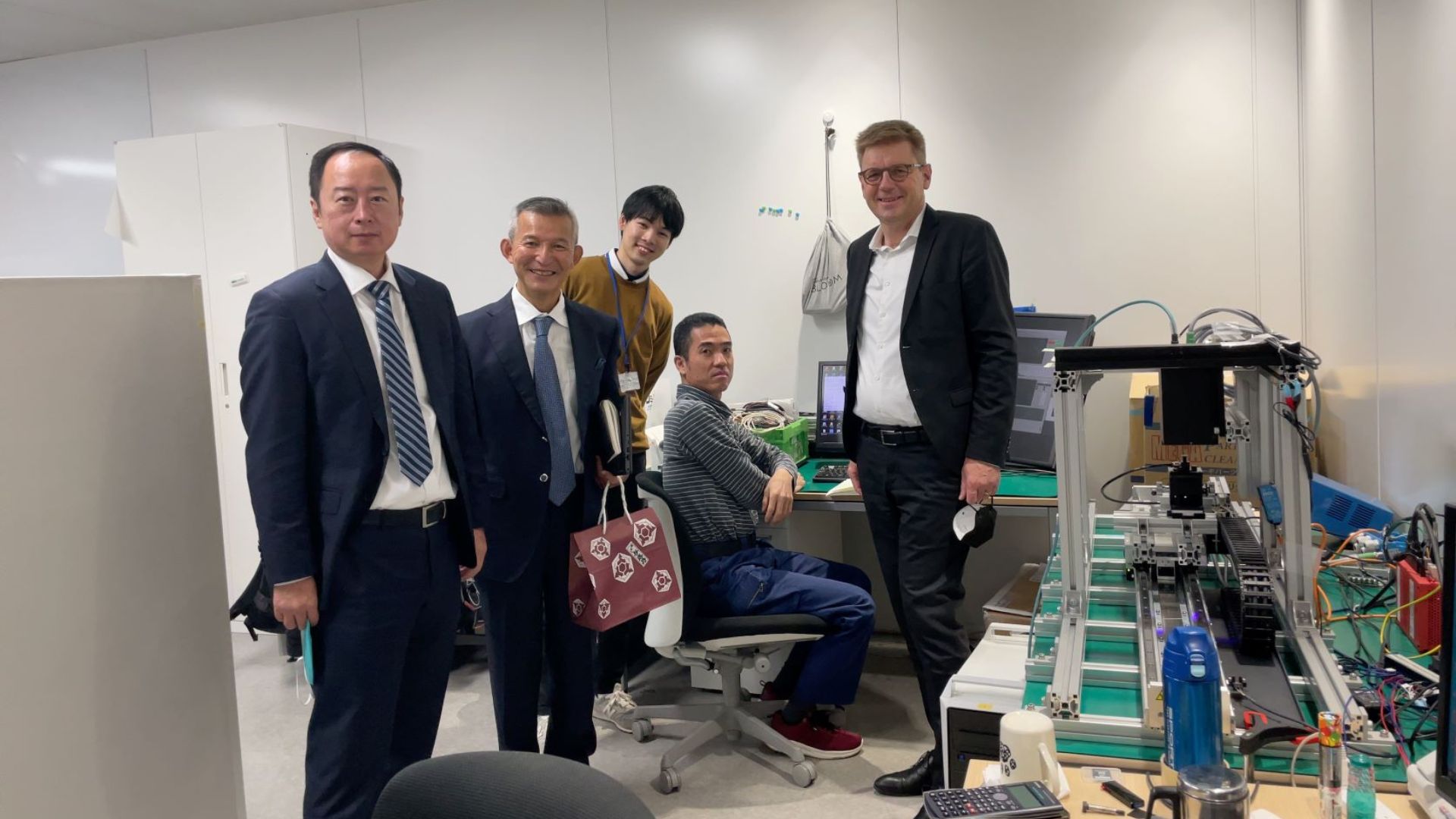
“The success of the image processing team is based on the process of continuous joint development and learning with the customers. I am fascinated by the enthusiasm and the tenacity of this team in relation to customer orientation and creativity.
The management of SICK Japan cultivated and supported the hidden startup approach from the beginning. With such strong support from the local management, SICK Japan established a young, dynamic image processing team with a hands-on mentality that tenaciously concentrates on local customer needs.”