In many parts of the world the regulation for emissions is becoming tighter, not just for standard pollutant components but also for some of the “exotic” ones like Mercury. In the new Best Available Technology Reference Document from the EU, Large Combustion plants in Europe will be required to reduce and monitor their gaseous Mercury Emissions. The regulations will go into effect in 2021, which seems like a long time from now, but for the plants to develop and implement control strategies, this is right around the corner. The limits for Mercury emissions in not new to the USA either. Since 2014 the large combustion plants (power and cement) are also required to keep their emissions of Mercury to an absolute minimum and they have to continuously monitor and report the emissions from the plants.
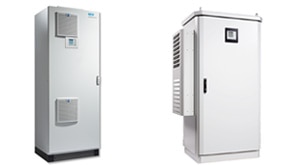
Fortunately for our customers in Asia, we have a wealth of experience in continuous mercury monitoring. The most recent version of the Hg CEMS by SICK developed in 2012 and has been in stalled in more than 190 combustion plants worldwide. The MERCEM300Z used two important techniques to achieve outstanding performance and signal stability. The first: we use a built-in thermal converter to convert all mercury compounds to the elemental form where they can be analyzed. This is done directly in the measuring chamber so that there is no-recombination or loss during internal system transport. Secondly, we use the Zeeman effect for generating measuring and reference wavelengths that are truly specific for Hg, eliminating interference from other pollutant gases in the flue gas stream.
As the regulations get more strict in Asia, SICK is prepared to help their clients by supplying superior measuring technology with premium performance. That is MERCEM300Z.