Automated picking with AI

Mar 30, 2026

How AI and robotics boost efficiency and help battle the skilled labor shortage

With its AI-based robotics solution, Part localization in bin (PLB), SICK is automating picking processes at its Buchholz site. Despite handling over 40,000 different products, the system now independently processes around 500 orders daily, even during multi-shift work. The combination of powerful localization algorithms and 3D cameras ensures high process reliability and flexibility. This is how the PLB system reduces the workload for employees, speeds up processes, and gets distribution logistics systems ready for the future.

How AI and robotics are transforming order picking

High variant diversity – the key issue for automators

Different sizes, packaging, and colors create significant challenges for automation when it comes to picking. Until now, it has not been possible to achieve the desired level of performance and flexibility, which is why picking was usually done manually.

With the aim of becoming a leading provider of solutions for complex picking applications, SICK developed the AI-based robotics solution PLB. The solution is designed to handle a wide range of items without prior data collection, automate simple and repetitive tasks, conserve resources, and enable productive operation even during multi-shift work.

The AI localization software analyzes each individual item in real time. It identifies relevant features such as shape and color and automatically selects the appropriate gripping position.


SICK demonstrates how automated picking processes increase efficiency and relieve employees

Picking robots in practice

At the SICK site in Waldkirch-Buchholz, the AI-based robotics solution PLB was integrated into the existing distribution logistics system to automate the picking of items with many variants. “The implementation process was faster than we expected,” says Michael Anders-Rapp, Solution Consultant at SICK AG. “The system was installed, integrated, and up and running within a few weeks.”

The robot handles picking: It retrieves items from two source containers and places them into four target containers. The source containers are delivered from an automated warehouse with conveyors. The application resembles a traditional manual picking station, but is fully automated.

The picking robot currently processes around 1,000 so-called single picks per day. In the near future, the picking rate is expected to increase to 200 to 400 picks per hour, amounting to 3,000 to 6,000 picks per day. In the medium term, 24/7 operation is planned to achieve maximum availability and efficiency. Even today, the solution optimizes workflows, reduces physical strain, and ensures a consistent level of quality with a minimal error rate, which is a decisive advantage in light of the skilled labor shortage.


Robot guidance systems
Flexible part localization for bin picking and depalletizing
PLB

Intelligent sensors for process reliability

Two compact picoScan100 2D LiDAR sensors monitor the level of the target containers with a 270° scanning angle and a range of up to 25 m. They detect overfilling, prevent overflow, and ensure a smooth material flow, even in the presence of ambient light or dust. They also make sure that every picked object ends up in the correct target container to ensure maximum process reliability and efficiency.


Safety and image processing as a foundation

The robot cell is completely enclosed and is protected by the TR4 safety switch. A safe programmable logic controller (PLC) evaluates all safety-related signals and controls the robot switch-off in accordance with EN ISO 13849-1.


LiDAR sensors
2D LiDAR sensor – high-performance and cost-effective in compact housing
picoScan100
Safety switches
RFID safety switch for door monitoring with manipulation protection
TR4 Direct
The robot cell is fully enclosed and safeguarded by the TR4 safety switch.

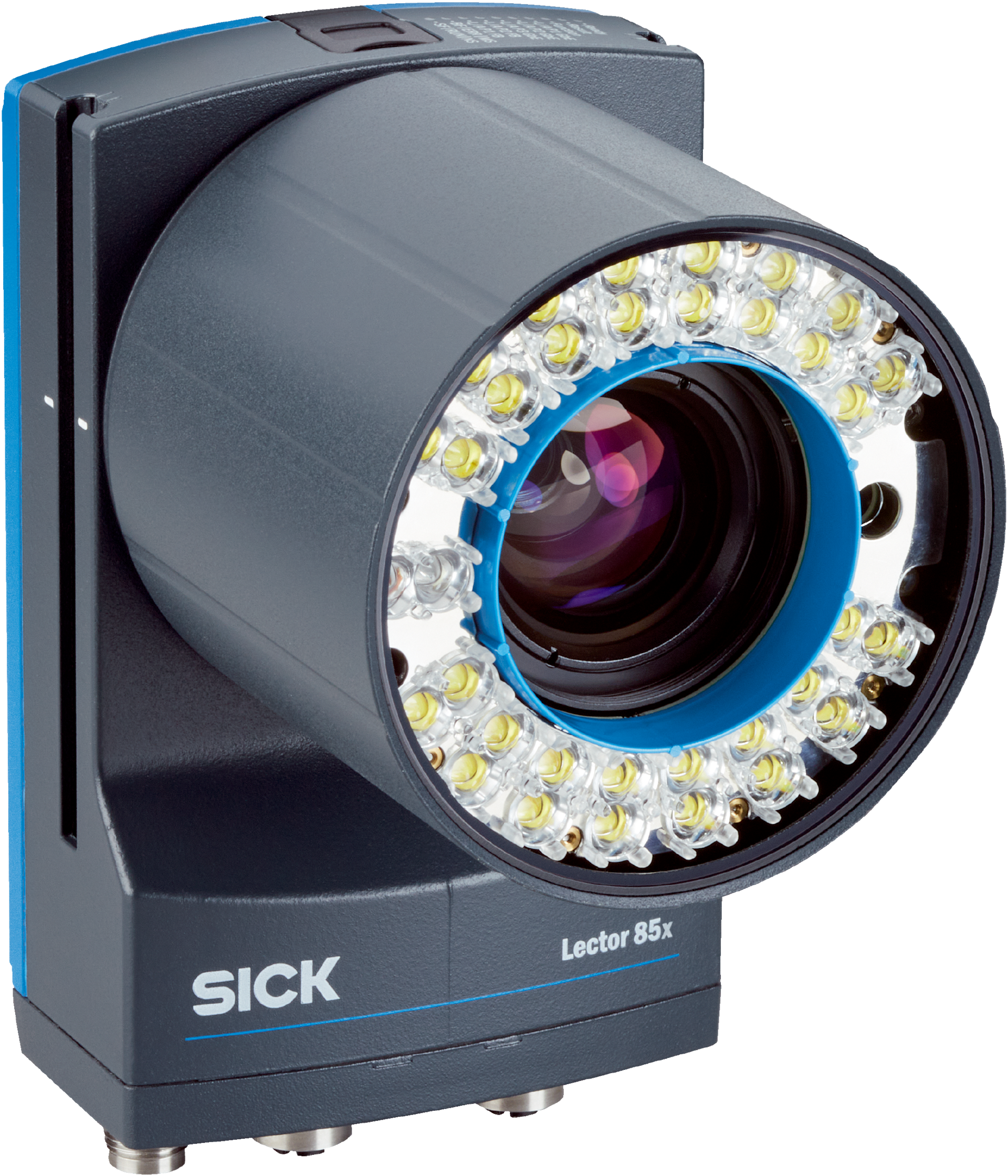
Image processing is handled by the PLB system from SICK. Using 3D cameras and AI algorithms, it detects item positions and calculates optimal gripping points, regardless of the shape, size, or color. Two Lector85x image-based code readers ensure unique product identification and seamless traceability. This combination of image-based guidance and AI technology enables scalable automation.

“The integration of picking robot has further increased the automation of these tasks,” explains Michael Baumer, Head of Warehouse Distribution Logistics at SICK AG. This makes it possible to train and use employees in other roles, such as the growing field of value-added services. The solution also pays off economically: With the very first robot, an attractive return on investment (ROI) is achieved, says Baumer. 

 
Image-based code readers
1D and 2D code identification using a camera for wide fields of view and large reading distances
Lector85x

This means automated picking is not just a trend, but a strategic move. With comprehensive solutions, SICK is paving the way for logistics systems that are not only efficient, but also future-proof. Those who act fast will secure a decisive competitive advantage.


Other articles

Why safe solutions in logistics are crucial: three real-world examples

Read more

An application that hits the mark: palletizing and depalletizing using a 2D LiDAR sensor

Read more

Kassow Robots' collaborative industrial cobot simplifies picking process with robot guidance system

Read more